Integrated Justice
Data Framework
The Challenge:
Information Silos in the Legal System
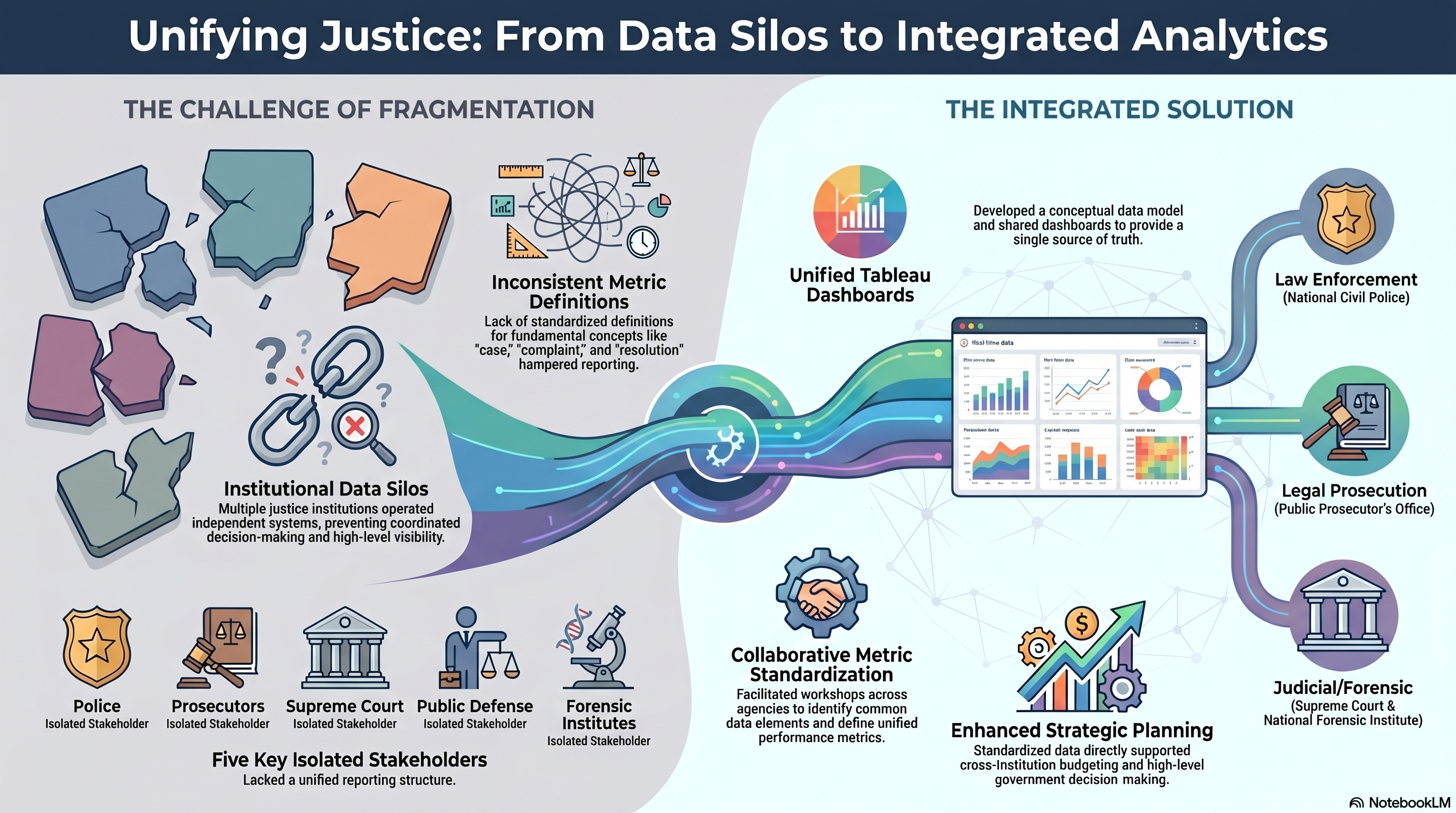
The national justice system was operating as a collection of independent islands. Police, prosecutors, and the judiciary each maintained their own disconnected databases.
This lack of integration meant that tracking a single legal case required manual correspondence between agencies. The resulting **information gaps** led to processing delays, administrative friction, and a lack of transparency for high-level policy decisions.
Structural Roadblocks:
- block Non-standardized data formats across agencies
- sync_disabled Zero real-time visibility into inter-agency workflows
- history_edu High reliance on physical paperwork for data sharing
Standardized Data Exchange Protocol
API-Driven Agency Integration
Unified Executive Intelligence Layer
The Solution:
A Centralized Intelligence Hub
I led the design of an Integrated Framework that bridged these institutional gaps. This wasn't just a technical fix; it was a **governance overhaul**.
We implemented a centralized data exchange layer that unified metrics from multiple sectors. By establishing a shared data vocabulary and automated reporting tools, we provided leadership with the first-ever holistic view of the national justice lifecycle.
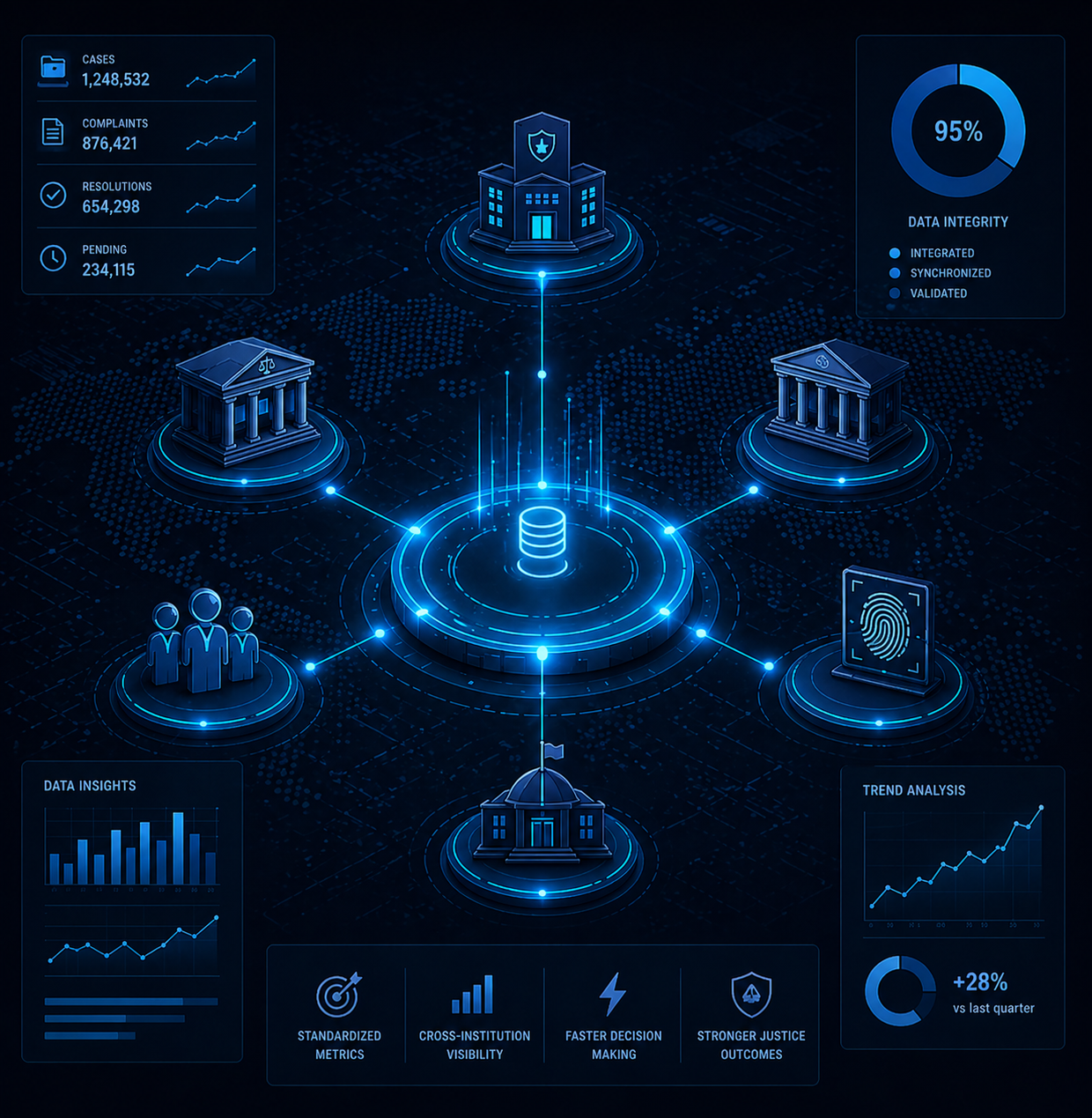
System-Wide Impact
Records Integrated
Faster Cross-Agency Audits
National Agencies Unified
Governance Roadmap
Explore the data governance model used to unify these disparate institutions.